
Can sound be used as a weapon? 4 questions answered
Editor’s note: Government and academic investigators continue to probe reports from Cuba that, starting in 2016 and continuing through 2017, U.S. and Canadian diplomats and tourists may have been subjected to a “sonic weapon,” damaging their hearing, causing nausea, speech problems and potentially even mild brain injuries.
Electrical engineering and computer science professors Wenyuan Xu from Zhejiang University and Kevin Fu from the University of Michigan explain their research, which suggests a more likely scenario of sloppy engineering, and what ultrasound frequencies (which can be used to transmit information gathered by listening devices) traveling through the air can – and can’t – do.
1. What is ultrasound useful for?
The most commonly known use for ultrasound – high-frequency sound waves human ears can’t hear – is a medical device used for examining a fetus during pregnancy. But there are plenty of other uses.Many offices have occupancy sensors that use ultrasound to detect movement and keep the lights on when someone is in a space, and off when nobody is around. These sensors operate at frequencies such as 32 kilohertz, far above what the human ear can hear – which is a range from 20 hertz to 20 kilohertz.
Other products use ultrasound to deliver targeted sound, for instance allowing a museum to play a recording for visitors in one area of an exhibit without disturbing others nearby. Electronic pest repellents use ultrasound to keep rodents or insects at bay.
A similar product can even be used to disperse teenagers; aging tends to reduce people’s ability to hear higher frequency sounds, so a noisemaker can annoy young people without adults even noticing. (This has also let teens create smartphone ringtones their elders can’t hear.)
2. What can go wrong with ultrasound?
Airborne ultrasound is not inherently bad. But things can go wrong. A former colleague of Kevin’s used to hear strange sounds from his hearing aid when in rooms with occupancy sensors, likely because the hearing aid’s electronics improperly converted the ultrasound into audible noises. These noises were annoying, but not harmful. A similar problem tainted one of our students’ research, conducted in a room that, unbeknownst to him, had an ultrasonic room occupancy sensor in the ceiling.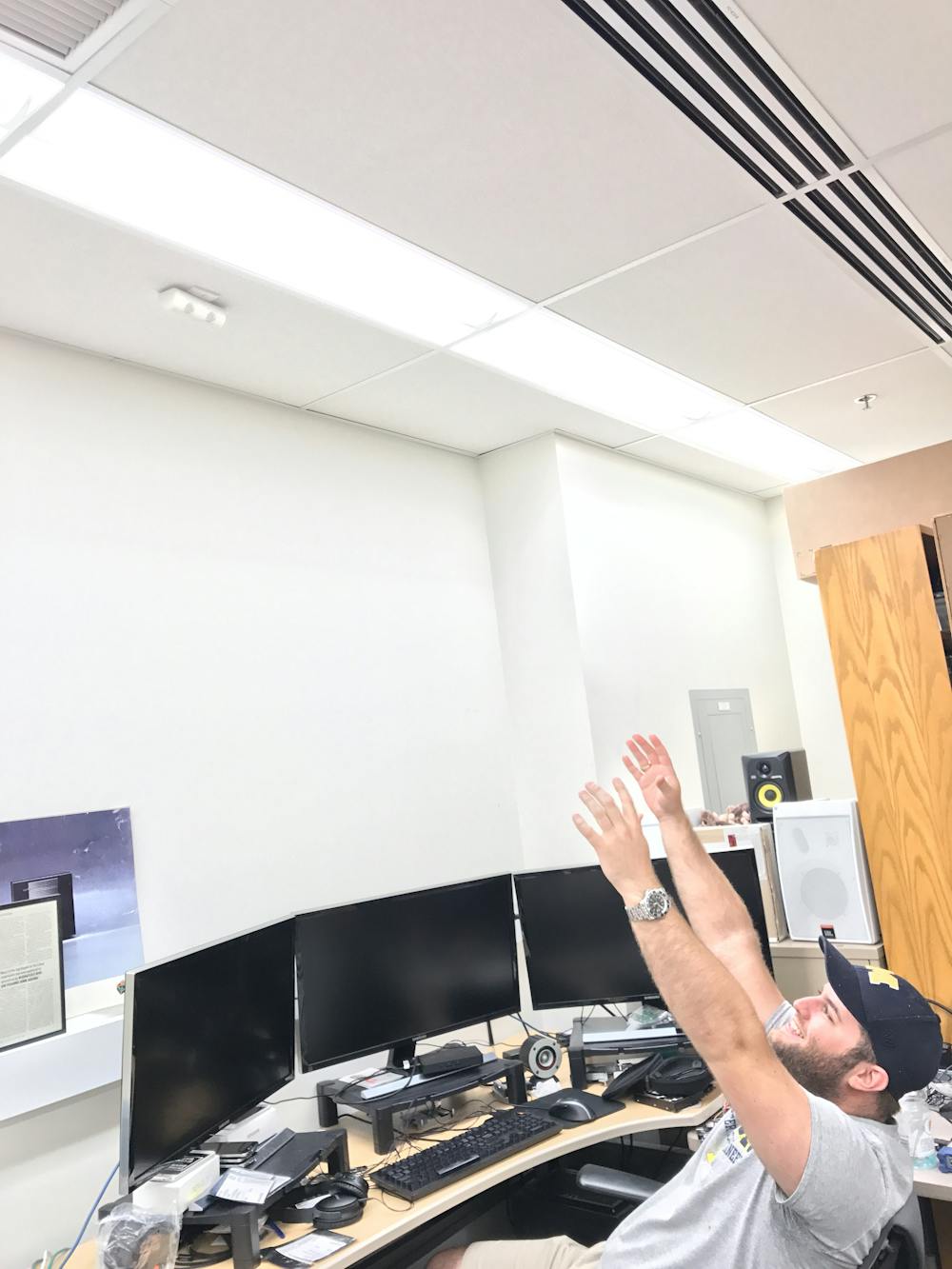
Connor Bolton, CC BY-ND
Sound can also affect the physical world, as when a singer shatters a wine glass. Microelectrical mechanical sensing chips – such as accelerometers used in car airbag systems and smartphones, and gyroscopes in drones – are susceptible to the same interference. Those systems can be attacked with sound, crashing a drone mid-flight, or fooling a smartphone about whether it’s moving.
Sign up here with your email
ConversionConversion EmoticonEmoticon